How Much Protein Do Young Athletes Need? A Parent's Guide
By Sravan · October 26, 2026 · 11 min read

CSA Health & Nutrition Series — Part 4
Does your child need extra protein because they play badminton or another sport?
It's a common question among parents, especially when children begin training regularly.
Some parents encourage extra eggs, milk, or paneer. Others wonder whether protein powders or shakes are necessary for better strength, muscle development, and recovery.
But here's something important:
Protein helps children grow and recover. More protein doesn't automatically make them stronger or better athletes.
The good news? Most healthy young athletes can get the protein they need from everyday foods.
Let's understand how much protein children need, which Indian foods are good sources, and how parents can support their child's nutrition without overcomplicating mealtimes.
1. Why Do Young Athletes Need Protein?
Protein is essential for every growing child, whether they participate in sports or not.
It helps the body:
Build and repair muscles and other tissues.
Support growth and physical development.
Maintain normal immune function and produce important enzymes and hormones.
Recover and adapt after physical activity.
For children playing badminton, football, cricket, swimming, or other sports, adequate protein supports the body's response to regular training.
However, protein is only one part of good sports nutrition.
Carbohydrates provide energy, healthy fats support growth, and vitamins and minerals help the body function normally. Sleep and recovery are equally important.
Remember: Training develops skills and fitness. Balanced nutrition supports that development.
For a broader introduction, read Part 1 — Nutrition Basics for Young Athletes.
2. How Much Protein Do Young Athletes Need?
Protein requirements depend on a child's age, body weight, growth stage, activity level, and overall diet.
The following are general daily protein reference values for healthy children and teenagers, based on US Dietary Reference Intakes.
| Age group | Approximate daily protein |
|---|---|
| 4–8 years | 19 g |
| 9–13 years | 34 g |
| 14–18 years, girls | 46 g |
| 14–18 years, boys | 52 g |
These are general population reference values, not individualized recommendations for athletes or maximum intake limits. Indian dietary guidelines and a child's individual circumstances may lead to different recommendations.
What about children who train regularly?
Children participating in demanding sports training may have different nutritional needs, depending on their training schedule, growth and energy requirements.
For example, a 12-year-old badminton player training regularly may benefit from having protein-rich foods across breakfast, lunch, snacks and dinner.
But this doesn't automatically mean they need protein supplements or an adult athlete's diet.
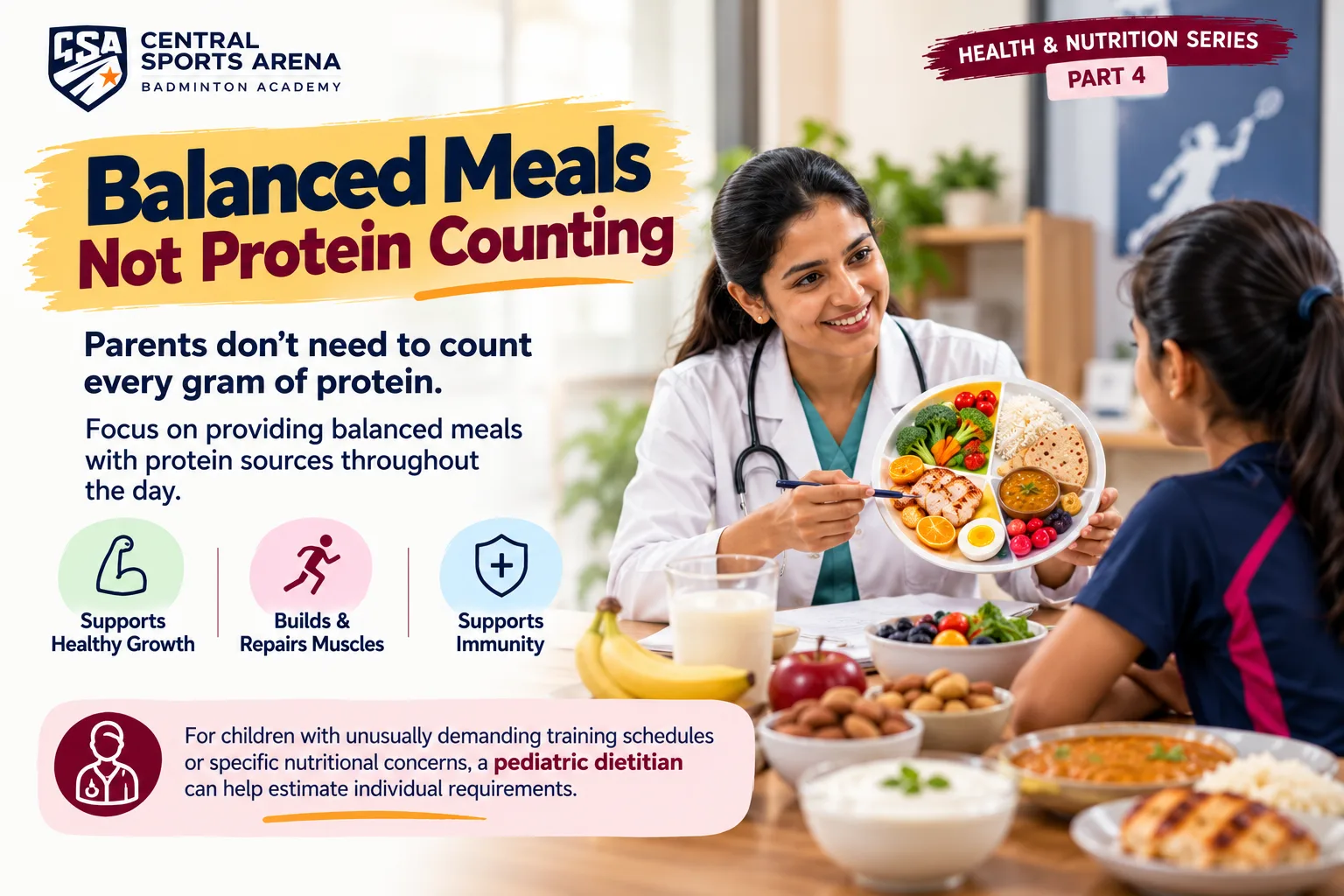
Parents don't need to count every gram of protein. Focus first on providing balanced meals with protein sources throughout the day.
For children with unusually demanding training schedules, restrictive diets, growth concerns, or specific nutritional needs, a qualified pediatric dietitian can help estimate individual requirements.
3. Best Indian Protein Sources for Young Athletes
You don't need expensive imported foods or special sports products to provide good-quality protein.
Many everyday Indian foods are excellent sources.
| Food | Approximate protein |
|---|---|
| 1 large egg | 6–7 g |
| Milk, 250 ml | 8 g |
| Plain curd, 200 g | 7–9 g |
| Paneer, 50 g | 8–10 g |
| Cooked dal, 1 cup | 7–10 g |
| Cooked chickpeas, 1 cup | 14–15 g |
| Cooked rajma, 1 cup | 13–15 g |
| Cooked chicken, 100 g | 27–31 g |
| Cooked fish, 100 g | 20–25 g |
Values are approximate. Actual protein content varies with portion size, ingredients, cooking method and product type. The portions above are food references, not recommended serving sizes for every child.
Simple Indian protein combinations
Some familiar meals can provide a useful mix of protein, carbohydrates and other nutrients:
Idli with sambar.
Rice with dal and curd.
Roti with paneer curry.
Vegetable dosa with sambar.
Egg sandwich with fruit.
Rajma with rice.
Roti with chicken or fish curry.
A balanced homemade meal is often more useful than an expensive protein product.
4. Protein Before vs. After Badminton Training
Parents often ask whether protein should be consumed before or after training.
The answer depends on the timing of meals, the child's appetite, and the training schedule.
Before training: Focus on energy
Badminton involves quick movements, repeated rallies and frequent changes of direction.
Carbohydrates are an important source of energy for these activities.
Before training, children generally benefit from foods that are easy to digest.
Good pre-training options:
Banana and a small cup of milk.
Idli with sambar.
Toast with peanut butter.
A light paneer sandwich.
Fruit with curd.
A larger meal is usually better eaten with sufficient time for digestion. Closer to training, a smaller snack may be more comfortable.
Avoid forcing heavy meals immediately before intense activity.
After training: Support recovery
After training, both protein and carbohydrates are useful.
Protein supports muscle repair and adaptation, while carbohydrates help replenish energy.
Simple recovery options:
Milk and banana.
Egg sandwich.
Paneer sandwich.
Dal, rice and curd.
Roti with paneer or chicken.
There is no need to panic about a strict 30-minute protein window.
If a child eats regular balanced meals and has an appropriate meal or snack after training, that is generally more important than perfect timing.
For more practical meal suggestions, read Part 2 — What Should Kids Eat Before & After Sports Training?.
5. A Practical Meal Plan for a School-Going Badminton Player
Many children attend school during the day and badminton coaching in the evening.
So what might a balanced training day look like?
Here's an illustrative example for a child attending evening coaching from 5:00 PM to 6:30 PM.
| Time | Meal | Why it helps |
|---|---|---|
| 7:30 AM | Idli, sambar and milk | Energy and protein to start the day |
| 10:30 AM | Fruit and curd | School-time nourishment |
| 1:00 PM | Rice, dal, vegetables and curd | Balanced lunch |
| 4:00 PM | Banana and a small paneer sandwich | Pre-training energy |
| 5:00–6:30 PM | Badminton training and water breaks | Activity and hydration |
| 7:00 PM | Milk or egg sandwich, if dinner is delayed | Recovery snack |
| 8:00 PM | Roti, paneer/chicken and vegetables | Dinner and recovery |
Important: This is an example of meal timing and food variety, not a prescribed diet. Portions should be adjusted to the child's age, appetite, growth, dietary preferences, and activity level.
What about early-morning badminton players?
For children attending early-morning coaching, such as a 5:30 AM session, a different approach may work better.
Before training: A small banana or another familiar, easily digestible snack, if needed and tolerated.
After training: A proper breakfast such as idli with sambar and milk, or eggs with toast and fruit.
Some children may not feel hungry immediately after waking. Parents should consider the child's comfort, the intensity of training, and whether they ate the previous evening adequately.
The goal is to help children train comfortably without regularly missing the nutrition they need.
6. Can Vegetarian Children Get Enough Protein?
Yes. A well-planned vegetarian diet can provide enough protein for growing athletes.
Useful vegetarian sources include:
Milk, curd and paneer.
Dal, rajma and chana.
Soybeans, tofu and soy chunks.
Peanuts, nuts and seeds.
Whole grains and pulses.
Easy vegetarian meal combinations
Breakfast: Idli with sambar and milk.
Lunch: Rice, dal, vegetables and curd.
Evening snack: Banana with roasted chana.
Dinner: Roti, paneer or tofu curry and vegetables.
Combining different plant foods throughout the day helps provide a variety of amino acids and other nutrients.
Vegetarian children do not need to combine complementary proteins in every single meal.
Children following vegan diets may need additional attention to vitamin B12, iron, calcium, and other nutrients.
The key is variety, adequate overall food intake, and consistent eating habits.
7. Do Kids Really Need Protein Powder?
This is one of the most important questions parents ask.
For most healthy children participating in recreational or academy-level sports, protein powder is usually unnecessary.
A balanced diet can generally provide sufficient protein without supplements.
Protein powder does not automatically lead to:
Stronger badminton smashes.
Faster footwork.
Greater stamina.
Better match performance.
Faster skill development.
These improvements depend on appropriate coaching, regular practice, physical development, adequate nutrition, sleep, and recovery.
When might supplements be considered?
A healthcare professional may consider supplementation when a child has specific nutritional difficulties or medically identified needs.
However, parents should not independently introduce adult bodybuilding supplements, mass gainers, or high-protein products simply because they are marketed for athletes.
Some sports supplements may contain undeclared ingredients or substances inappropriate for children.
Food first. Supplements only when professionally advised.
8. Five Common Protein Mistakes Parents Should Avoid
Mistake 1: Believing more protein means more muscle
Muscle development depends on growth, maturation, training, and overall nutrition—not protein intake alone.
Mistake 2: Ignoring carbohydrates
Carbohydrates help fuel badminton's repeated bursts of movement.
A child who consumes enough protein but insufficient total energy may still struggle with training and recovery.
Mistake 3: Replacing meals with protein shakes
Regular meals provide more than protein. They also supply fibre, vitamins, minerals, and other important nutrients.
Mistake 4: Focusing only on protein after training
Consistent eating throughout the day is more useful than relying on one high-protein snack.
Mistake 5: Comparing children with adult athletes
Children have different nutritional needs from adults.
Adult gym diets, bodybuilding routines, and supplement plans should not be copied for young athletes.
9. A Simple Rule Parents Can Remember
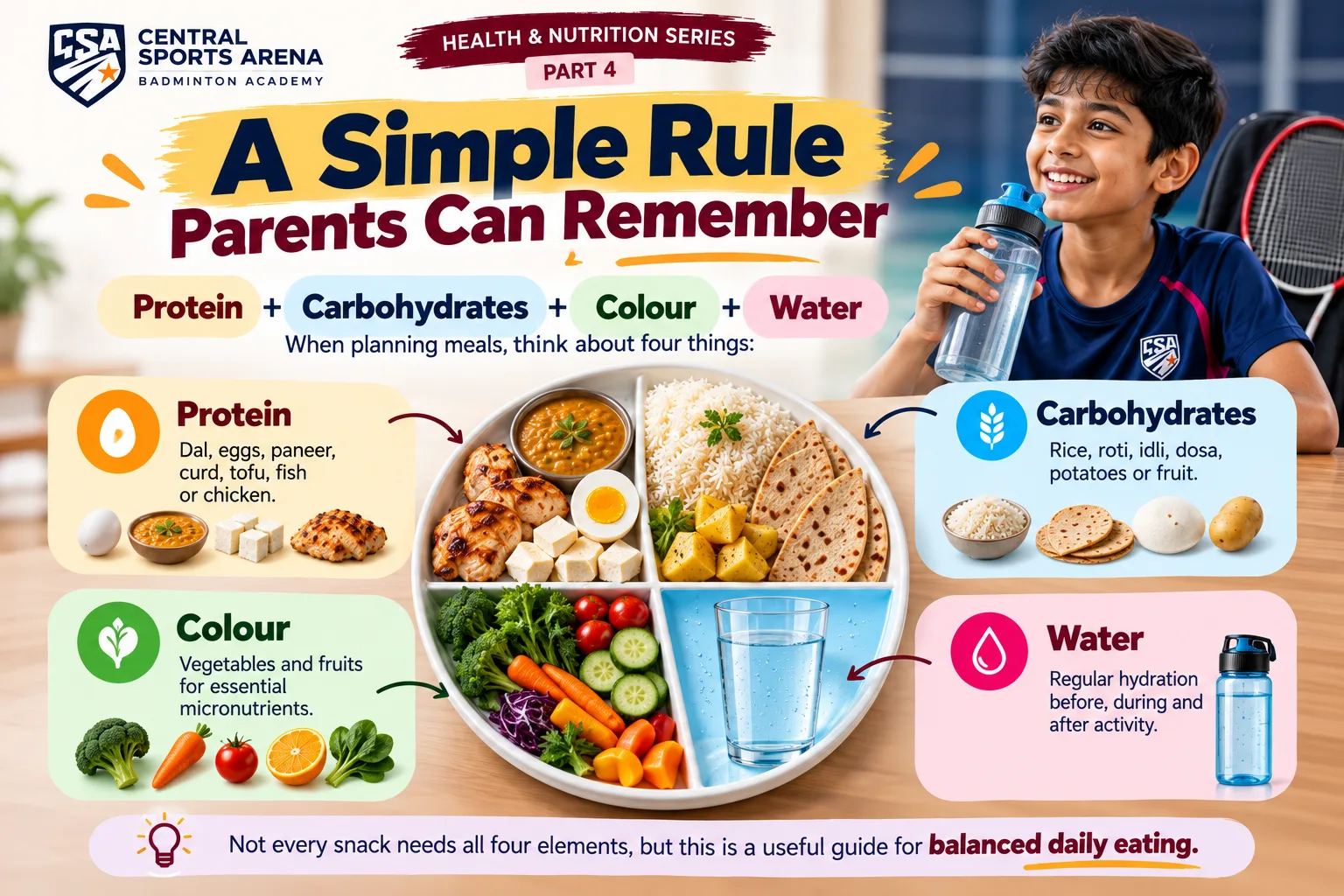
Protein + Carbohydrates + Colour + Water
When planning meals, think about four things:
1. Protein
Dal, eggs, paneer, curd, tofu, fish or chicken.
Supports growth and tissue repair.
2. Carbohydrates
Rice, roti, idli, dosa, potatoes or fruit.
Provides energy for school, play and training.
3. Colour
Vegetables and fruits.
Provides essential vitamins, minerals, and other beneficial nutrients.
4. Water
Regular hydration before, during and after activity.
Supports normal body function and physical activity.
Not every snack needs all four elements, but this is a useful guide for balanced daily eating.
For more hydration guidance, read Part 3 — Hydration for Young Athletes.
10. Quick Nutrition Checklist for Parents
You don't need a complicated nutrition chart to support your child's sports journey.
Start with these five questions:
Does my child eat regular meals without frequently skipping breakfast?
Do most main meals include a protein source?
Does my child have a suitable snack before training when needed?
Is food and water available after training?
Are we prioritizing nutritious food over unnecessary supplements?
If you're consistently supporting these habits, you're helping build a strong foundation for healthy growth and participation in sports.
This checklist is a general guide, not a nutritional assessment.
11. Frequently Asked Questions
Does playing badminton increase a child's protein needs?
Regular sports training can influence nutritional requirements, particularly when training volume is high.
However, requirements vary with age, growth, training load, and overall energy intake. Not every child who plays badminton needs additional protein beyond a balanced diet.
Is one egg enough protein after badminton?
One large egg provides approximately 6–7 grams of protein.
It can contribute to recovery, but the overall meal matters too. An egg sandwich with fruit or milk, for example, provides additional energy and nutrients.
Can vegetarian badminton players build strength without protein powder?
Yes.
Milk, curd, paneer, tofu, soy, dal and other pulses can help meet protein requirements when included in a varied, adequate diet.
Strength development also depends on age-appropriate training, growth, and recovery.
Should children drink protein shakes every day?
Generally, protein shakes are not necessary for healthy children who meet their nutritional needs through regular food.
If parents are concerned about inadequate intake, restricted eating, or growth, they should seek advice from a pediatrician or qualified pediatric dietitian before introducing supplements.
12. A Message from CSA to Parents
At Central Sports Arena (CSA), we believe a young athlete's development goes beyond the badminton court.
Structured coaching, regular practice, balanced nutrition, proper recovery, and parental encouragement all contribute to long-term progress.
As parents, it's natural to want the best for our children.
But supporting a young athlete doesn't mean calculating every gram of protein, purchasing expensive supplements, or comparing their diet with that of professional players.
Sometimes, the most valuable habits are also the simplest:
Eat well. Train consistently. Recover properly. Enjoy the sport.
Our goal is not simply to develop better badminton players today, but to help children build healthy habits that support them throughout life.
Coming Next — Part 5: Sleep & Recovery for Young Athletes
How much sleep do children need? Why does recovery matter for sports performance? And how can parents balance school, training, and rest?
We'll explore these questions in the next article.
References & Further Reading
National Institutes of Health — Dietary Reference Intakes — General nutrient reference values.
ICMR–National Institute of Nutrition — Dietary guidelines and nutrition recommendations for Indian populations.
HealthyChildren.org — American Academy of Pediatrics — Pediatric nutrition and sports health education.
USDA FoodData Central — Food nutrient composition data.
Educational note: This article provides general nutrition information for healthy children. Individual nutritional requirements vary. Consult a pediatrician or qualified pediatric dietitian for personalized advice.
CSA Health & Nutrition Series
Central Sports Arena — Bachupally, Hyderabad
Train. Play. Compete. Connect.
Explore CSA: Health calculators · Water intake · Protein intake · Youth badminton training
Recommended For You

Health & Nutrition
Sleep & Recovery for Young Athletes: Are Kids Getting Enough Rest?
Is your child getting enough rest between school and badminton training? Discover how much sleep young athletes need, why recovery matters, and practical ways parents can balance training, homework and healthy routines.
Nov 5, 2026
Health & Nutrition
Hydration for Young Athletes
Learn how to keep young athletes properly hydrated before, during and after training. Part 3 covers daily water needs, signs of dehydration, electrolytes, sports drinks, hot-weather training and simple tournament-day hydration habits.
Oct 17, 2026
Health & Nutrition
What Should Kids Eat Before & After Sports Training?
Help young athletes fuel training and recover better with simple food choices and smart timing. This guide covers what kids can eat before and after sports, with practical Indian meal and snack ideas for morning, evening and heavier training days.
Oct 11, 2026
Health & Nutrition
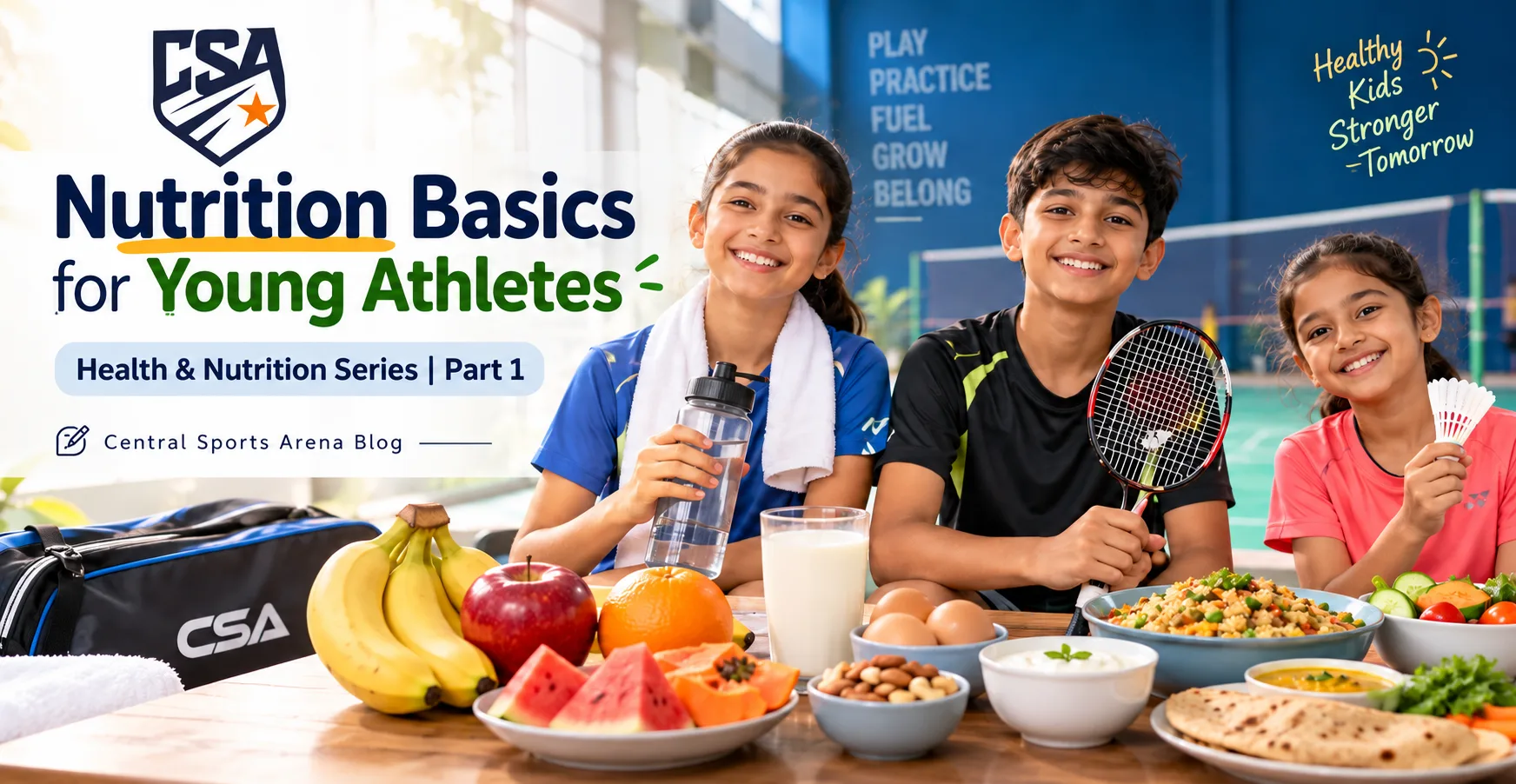
Nutrition Basics for Young Athletes
Good nutrition helps young athletes grow, train, recover and perform at their best. In Part 1 of our Health & Nutrition for Young Athletes series, we cover the basics of balanced meals, protein, hydration, meal timing, recovery and healthy habits for growing children.
Oct 4, 2026