Sleep & Recovery for Young Athletes: Are Kids Getting Enough Rest?
By Sravan · November 5, 2026 · 9 min read

CSA Health & Nutrition Series — Part 5
Your child trains hard. But are they recovering well enough?
Between school, homework, badminton coaching, tournaments and screen time, children's days can become surprisingly busy.
Parents naturally focus on coaching quality, training hours and nutrition. But one important factor is often overlooked: sleep and recovery.
A child who trains consistently but doesn't get enough rest may struggle with concentration, energy, mood and physical performance.
More training doesn't always mean more progress. Sometimes, better recovery makes the difference.
Let's understand how much sleep young athletes need, why recovery matters and how parents can build healthier routines.
1. Why Is Sleep Important for Young Athletes?
Sleep is not simply a break from activity. It's when the body and brain carry out essential recovery processes.
For children who play badminton or other sports, adequate sleep supports:
Muscle recovery: Helps the body repair and adapt after physical activity.
Learning and coordination: Supports the consolidation of newly learned skills and movement patterns.
Focus and reaction time: Helps children stay alert and make decisions during rallies.
Growth and development: Supports normal physical and hormonal development.
Mood and motivation: Helps children manage emotions, stress and everyday challenges.
A well-rested child may be better prepared to learn, practise and enjoy their sport.
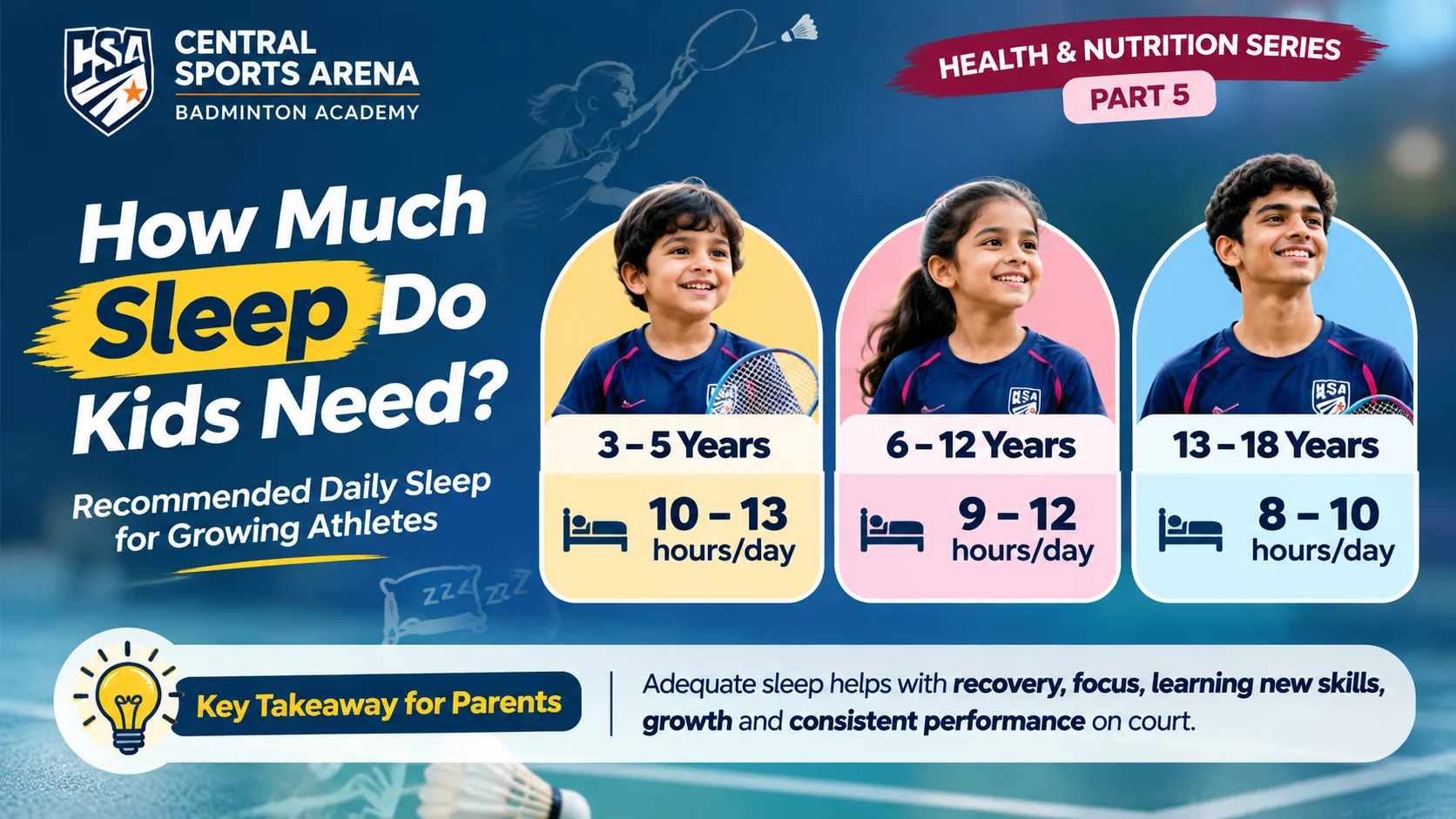
2. How Much Sleep Do Children Need?
The American Academy of Sleep Medicine recommends the following daily sleep durations, including naps where applicable.
| Age | Recommended sleep |
|---|---|
| 3–5 years | 10–13 hours |
| 6–12 years | 9–12 hours |
| 13–18 years | 8–10 hours |
These recommendations apply to children generally, including those who participate in sports.
What does this mean for badminton players?
Consider an 11-year-old who wakes up at 6:00 AM for school.
To get 10 hours of sleep, the child would need to be asleep by approximately 8:00 PM.
But what if badminton coaching ends at 8:00 PM, followed by dinner, homework and screen time?
Sleep may get pushed to 10:30 PM or later, leaving the child with only 7.5 hours before a 6:00 AM wake-up.
That's below the recommended range for their age.
The important question isn't just how many hours your child trains. It's whether their daily schedule leaves enough time to recover.
3. What Happens When Children Don't Get Enough Sleep?
An occasional late night is unlikely to ruin a child's performance.
However, regularly getting insufficient sleep can affect both health and training.
Parents may notice:
Difficulty waking up or feeling tired during the day.
Reduced concentration at school or coaching.
Slower reactions and more mistakes during play.
Irritability, frustration or reduced motivation.
Feeling unusually tired after normal training sessions.
Difficulty maintaining consistent performance.
These signs can have several causes, not just insufficient sleep.
If fatigue persists despite adequate rest, or if a child snores loudly or has breathing difficulties during sleep, parents should consult a pediatrician.
4. Why Recovery Matters as Much as Training
Imagine a young badminton player practising footwork, smashes and rallies for 90 minutes.
During training, the child challenges their muscles, coordination and endurance.
After training, the body needs time, nutrition and sleep to recover and adapt.
<text strong>Training + Nutrition + Sleep + Recovery = Sustainable Progress</text>
Without adequate recovery, increasing training hours may lead to persistent fatigue, reduced enjoyment and a greater risk of overuse problems.
This doesn't mean children should avoid challenging practice.
It means training should be balanced with appropriate rest.
Rest is not a reward for working hard. It is part of the training process.
5. How Much Rest Do Young Athletes Need?
There is no single training schedule suitable for every child.
Rest requirements depend on age, physical development, training intensity, competition demands and individual recovery.
As a general principle, young athletes should have at least one to two days per week away from organized sport-specific training and competition, consistent with widely used pediatric sports guidance.
That doesn't necessarily mean sitting indoors all day.
Children can enjoy walking, relaxed cycling, family activities or unstructured play, depending on how they feel.
What about children training every day?
Daily badminton practice isn't automatically harmful, but intensity and overall training load matter.
Parents and coaches should consider:
Is every session physically demanding?
Does the child have lighter training days?
Are they getting enough sleep?
Are they enjoying training?
Do they have time for school, family and friends?
A well-designed training program includes recovery, not just repetition.
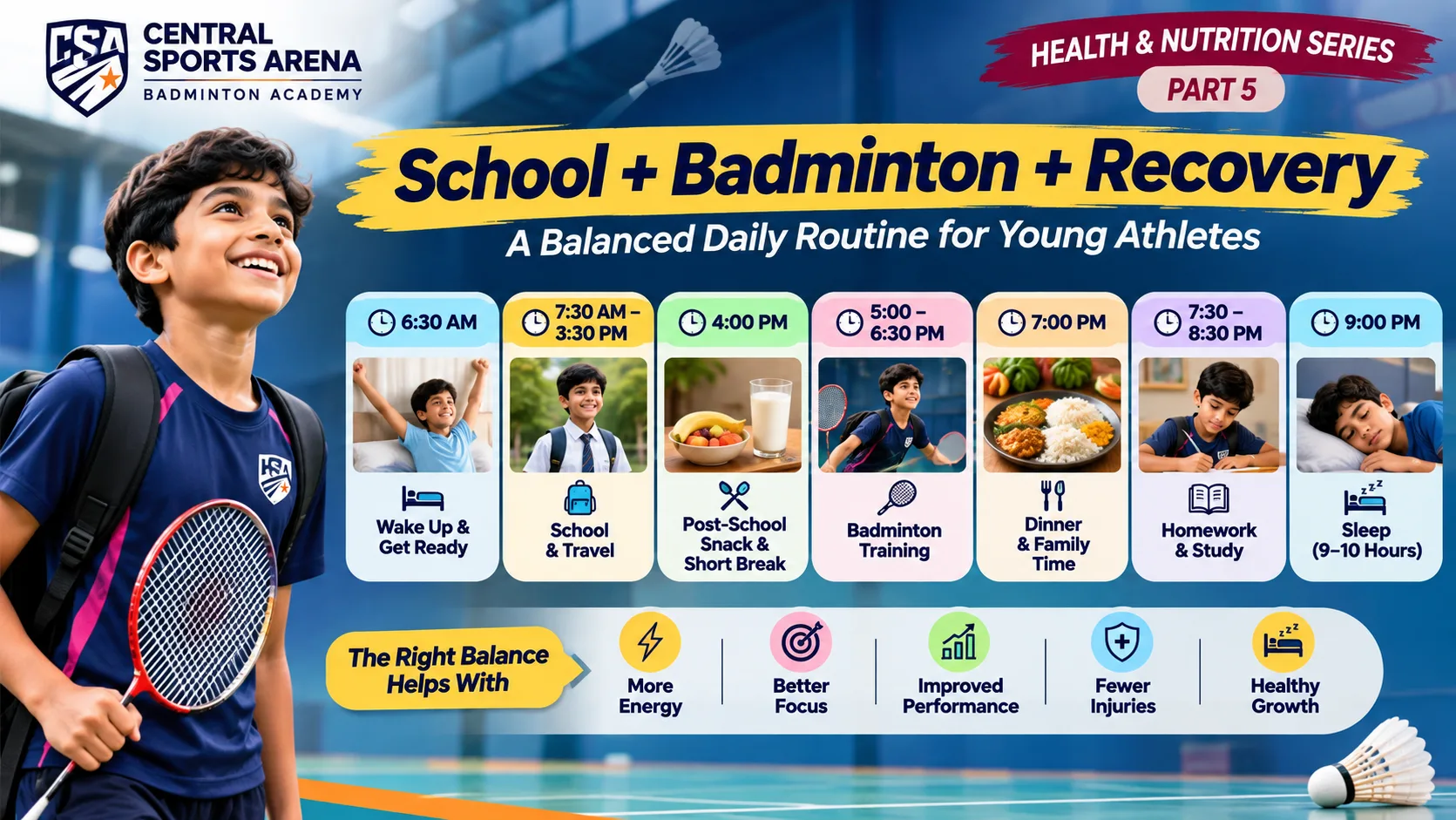
6. Balancing School, Badminton and Sleep
For many families, the biggest challenge isn't knowing that sleep matters.
It's finding enough time for it.
Example: A school-going badminton player
| Time | Activity |
|---|---|
| 6:30 AM | Wake up and get ready |
| 7:30 AM–3:30 PM | School and travel |
| 4:00 PM | Snack and short break |
| 5:00–6:30 PM | Badminton training |
| 7:00 PM | Dinner and family time |
| 7:30–8:30 PM. | Homework or preparation for school |
| 8:30 PM | Wind-down routine |
| 9:00 PM | Sleep |
A 9:00 PM bedtime and 6:30 AM wake-up provide 9.5 hours in bed, allowing for slightly less actual sleep.
This is an illustrative schedule, not a prescription. Families should adjust meals, homework, and bedtime according to their child's training schedule, school commitments, and sleep requirements.
What if coaching ends at 8:00 PM?
Consider whether homework can be completed earlier, dinner can be prepared in advance, and unnecessary evening screen time can be reduced.
If the schedule repeatedly prevents adequate sleep, it may be worth reconsidering training duration or timing.
A sustainable routine is more valuable than a packed timetable.
7. Five Simple Habits That Improve Recovery
1. Maintain a consistent sleep schedule
Encourage similar bedtimes and wake-up times throughout the week, including weekends where practical.
2. Reduce screens before bedtime
Try keeping phones, tablets and television away during the final 30–60 minutes before sleep.
3. Eat well after training
A balanced meal containing carbohydrates and protein helps replenish energy and supports recovery.
Read Part 4 — Protein for Young Athletes for practical food ideas.
4. Stay hydrated
Encourage regular water intake throughout the day and during training, especially in warm conditions.
Explore Part 3 — Hydration for Young Athletes.
5. Make room for lighter days
Not every session needs maximum intensity. Recovery days, relaxed activity and unstructured play support a balanced sporting routine.
8. How Can Parents Recognize Poor Recovery?
Children may not always say, "I'm not recovering well."
Instead, they might say:
"I'm too tired for practice."
"My legs are hurting again."
"I don't feel like playing today."
Parents and coaches should pay attention when these patterns persist.
Signs worth discussing
Ongoing fatigue or unusual tiredness.
Repeated muscle soreness that doesn't improve.
Persistent pain during activity.
Declining enthusiasm for badminton.
Difficulty concentrating.
Noticeable changes in sleep or mood.
These signs don't necessarily mean overtraining, but they deserve attention.
Persistent pain, unexplained fatigue or recurring symptoms should be assessed by an appropriate healthcare professional.
9. A Simple Recovery Checklist for Parents
Before adding another training session, ask:
- Is my child getting enough sleep for their age?
- Are meals and hydration adequate?
- Is there time for homework and relaxation?
- Does the training schedule include lighter or rest days?
- Is my child still enjoying badminton?
If several answers are "No", consider reviewing the weekly routine with your child and coach.
Progress should never come at the expense of a child's health and enjoyment of sport.
10. Frequently Asked Questions
Is eight hours of sleep enough for a 10-year-old badminton player?
Usually not. Children aged 6–12 are generally recommended to get 9–12 hours of sleep per 24 hours.
Should children train when they are very tired?
If a child is unusually exhausted, unwell or experiencing persistent pain, parents should avoid pushing them through intense training. Discuss appropriate rest and any concerning symptoms with the coach or a healthcare professional.
Is sleeping longer on weekends enough to recover from weekday sleep loss?
Extra sleep may help reduce sleepiness, but it does not reliably replace the benefits of consistently adequate sleep. Regular sleep habits are preferable.
Does taking a rest day reduce badminton performance?
Appropriate rest supports recovery and sustainable training. One or two planned rest days are not the same as losing progress.
Do young athletes need ice baths or special recovery supplements?
Most recreational young athletes don't need expensive recovery products. Adequate sleep, balanced meals, hydration and appropriate rest should be the foundation.
11. A Message from CSA to Parents
At Central Sports Arena, we believe long-term athletic development requires more than hours spent on court.
As parents, we want our children to improve, compete confidently and achieve their potential.
But sometimes, in trying to provide every opportunity, we unintentionally fill their schedules with school, coaching, additional practice and competitions—leaving little time for recovery.
A child who gets adequate sleep, eats well and enjoys training is building a healthier foundation for long-term development.
The goal isn't to train as much as possible. It's to train consistently, recover properly and keep improving.
Let's help our children become not just better athletes, but healthier and happier individuals.
Coming Next — Part 6: Healthy Sports Habits That Last
How can parents help children build consistency without pressure? We'll explore motivation, balanced routines and sustainable sports habits.
References & Further Reading
American Academy of Sleep Medicine — Recommended sleep duration for children and adolescents.
CDC — Sleep and Sleep Disorders — Sleep recommendations and healthy sleep habits.
American Academy of Pediatrics — HealthyChildren.org — Pediatric sleep, sports participation and overuse injury guidance.
American Medical Society for Sports Medicine — Sports medicine resources and youth athlete health.
Educational note: This article provides general health and sports education. Sleep and recovery needs vary between children. Consult a qualified healthcare professional for persistent fatigue, sleep difficulties or injury concerns.
CSA Health & Nutrition Series
Central Sports Arena — Bachupally, Hyderabad
Train • Play • Compete • Connect
Explore CSA: Health calculators · Water intake · Protein intake · Youth badminton training
Recommended For You

Health & Nutrition
How Much Protein Do Young Athletes Need? A Parent's Guide
Does your child need extra protein for badminton or sports training? Discover how much protein young athletes need, the best Indian foods, practical meal plans, vegetarian options, and whether protein powder is really necessary.
Oct 26, 2026

Health & Nutrition
Hydration for Young Athletes
Learn how to keep young athletes properly hydrated before, during and after training. Part 3 covers daily water needs, signs of dehydration, electrolytes, sports drinks, hot-weather training and simple tournament-day hydration habits.
Oct 17, 2026

Health & Nutrition
What Should Kids Eat Before & After Sports Training?
Help young athletes fuel training and recover better with simple food choices and smart timing. This guide covers what kids can eat before and after sports, with practical Indian meal and snack ideas for morning, evening and heavier training days.
Oct 11, 2026

Health & Nutrition
Nutrition Basics for Young Athletes
Good nutrition helps young athletes grow, train, recover and perform at their best. In Part 1 of our Health & Nutrition for Young Athletes series, we cover the basics of balanced meals, protein, hydration, meal timing, recovery and healthy habits for growing children.
Oct 4, 2026